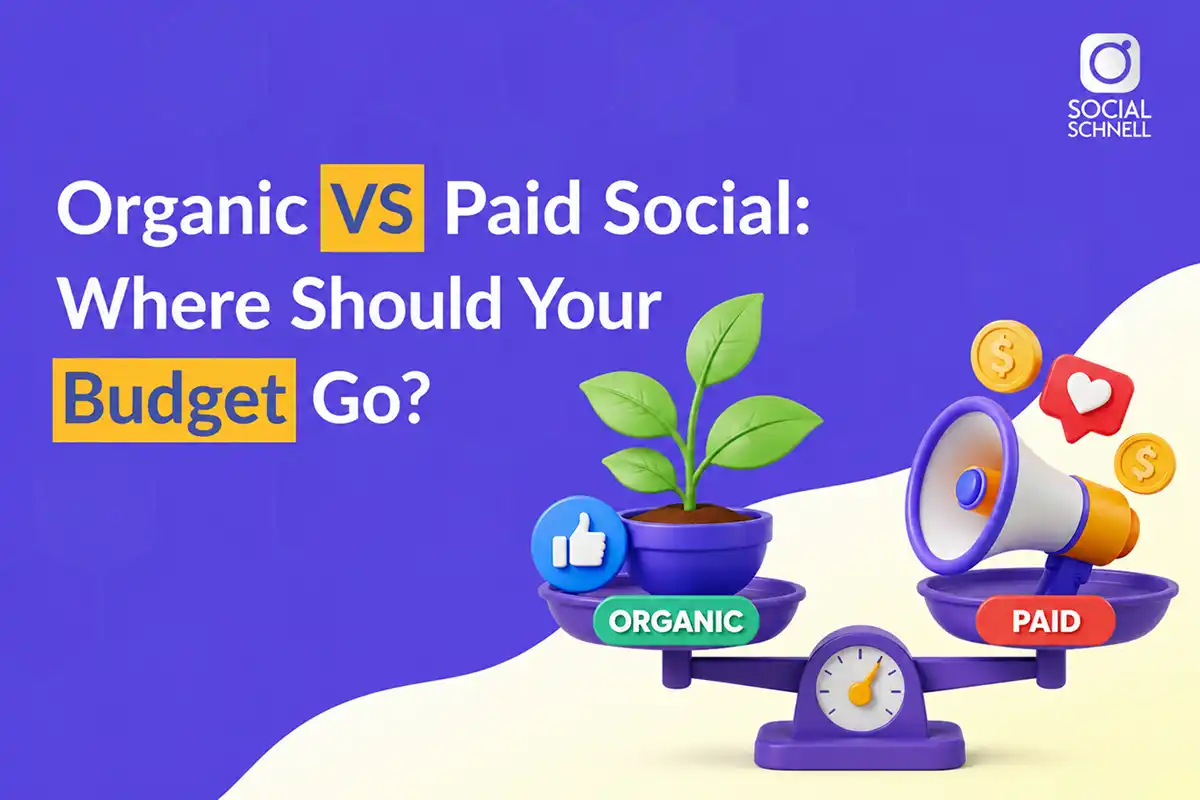
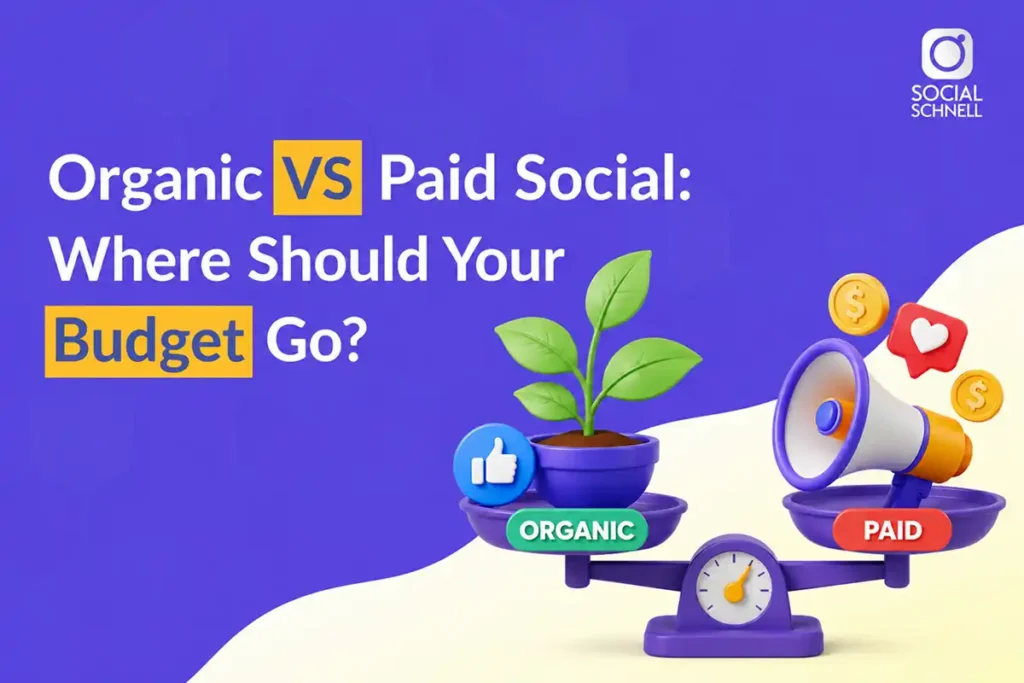
Organic vs Paid Social: Where Should Your Budget Go?
Organic reach on Facebook now sits below 2% for most business pages, and even Instagram, the platform brands lean on hardest, pushes a typical post to under 10% of the people who already follow you. Read that again. You can build an audience of ten thousand, post something genuinely good, and reach fewer than a thousand of them without paying.
That single fact reframes the whole organic versus paid debate. For years the assumption was simple: organic is the free option, paid is the expensive one, so do as much free stuff as you can and pay only when you have to. That logic quietly stopped being true. Today the question isn’t “which one is free,” it’s “which one earns its place in the budget right now, given what I’m trying to achieve.”
This is one of the most common things founders bring to a digital marketing agency, usually framed as “we’re posting constantly and nothing’s happening” or “we’re spending on ads and can’t tell if it’s working.” Both complaints point at the same underlying confusion: not knowing what each channel is actually for. So before we talk about splitting money, let’s get clear on what you’re really buying with each one.
What Organic Social Actually Buys You
The mistake is judging organic traffic by how many people it reaches. That’s the wrong scoreboard. Reach is exactly the thing organic is the worst at now.
What organic does well is something paid can’t buy directly: it builds the sense that there’s a real business with a point of view behind the logo. The consistent posting, the way you answer comments, the content that shows how you actually think, the small proof points that pile up over months. None of that converts a stranger on its own. All of it makes the difference when someone is deciding whether to trust you with money.
Organic Is The Thing People Check, Not The Thing That Finds Them
Almost nobody discovers a brand through an organic post anymore and buys on the spot. But a huge number of people see an ad, get curious, click through to the profile, and make a judgment in about four seconds. An active, sharp, human profile says “these people are legit.” A graveyard of three posts from last year says the opposite, and it quietly kills conversions you already paid to generate.
So organic earns its budget in trust, retention, and credibility. It compounds slowly and it’s nearly impossible to attribute cleanly, which is exactly why impatient brands underrate it. The payoff is real, it’s just delayed and hard to put in a spreadsheet.
What Paid Social Actually Buys You
Paid traffic is the opposite in almost every way. It’s fast, it’s controllable, and it’s measurable down to the dollar.
You decide who sees your content, you decide how much to spend, and within days you have data telling you whether it’s working. Cost per click, cost per acquisition, return on ad spend. If the numbers are good, you put in more money and get more results. If they’re bad, you see it immediately and stop the bleeding. That feedback loop is the entire point of paid, and it’s why paid is the only one of the two you can genuinely scale on demand.
Targeting Is Half The Value
Platforms let you reach people by interest, behaviour, job title, or by building lookalikes of your best customers, and you can retarget anyone who is already engaged with you. That’s why paid traffic tends to convert better than random discovery, you’re showing relevant offers to relevant people instead of shouting into a feed.
The honest downside: paid stops the second you stop paying. There’s no equity being built, no asset you own. You’re renting attention, and the rent goes up as more competitors bid for the same audiences. Paid also has zero patience for a weak offer. If your product, price, or creative is off, paid won’t fix it, it’ll just help you lose money faster and with better reporting.
The Framing That Actually Decides Your Split
Here’s the reframe that makes the budget question answerable. Stop asking “organic or paid” and start asking “what do I need, and how soon.”
If you need revenue and leads now, paid wins the larger share by default, because it’s the only channel that delivers predictably on a timeline. If you’re trying to build a brand that lowers your acquisition costs two years from now, organic deserves real investment, because that’s the only channel that compounds into an owned asset. Most businesses need both things at once, which is why both belong in the budget, just rarely in equal weight.
The two also feed each other when you let them. Your organic posts are a free testing lab: whatever earns engagement organically is a strong candidate to put paid spend behind, because your audience already told you it works. And your paid traffic performs better when it lands on a brand with a living organic presence. Run them as one system and your cost per result drops. Run them in separate silos and you pay full price for both while getting the compounding benefit of neither.
How To Actually Split The Budget By Stage
There’s no universal ratio, but your stage points you to a sensible starting weight.
Match The Split To Where Your Business Is
Early-stage or need-results-now brands. Lean hard into paid, roughly 70 to 80% of the budget. You don’t have an audience or the runway for organic to carry you, and you need data and revenue quickly. The organic slice here isn’t your growth engine, it’s the credibility layer that keeps paid traffic from bouncing off an empty profile.
Established brands with an existing audience. You can shift closer to a 50-50 balance, or even tilt toward organic for community and retention, because you’ve earned recognition that’s worth maintaining and compounding. Paid then concentrates on conversion and reaching fresh audiences rather than carrying the entire load.
Direct-response, ecommerce, and lead-gen businesses with hard ROAS targets. Paid almost always takes the bigger share, simply because it’s the measurable, scalable channel and your goals are bottom-of-funnel. Organic supports trust and retargeting but won’t drive the bulk of the revenue alone.
Whatever number you start with, treat it as a hypothesis, not a rule. Watch the paid metrics that map to revenue and the organic signals that map to audience health, then move the budget toward whatever’s earning. The split should drift over time as the data argues with your assumptions. That’s the system working, not failing.
The Error That Quietly Drains The Most Money
The most expensive mistake isn’t picking the wrong ratio. It’s running organic and paid as two unrelated efforts that never inform each other.
When they’re disconnected, you lose the entire compounding advantage. Your paid spend ignores what your organic audience already proved they like. Your content team creates in a vacuum, blind to what’s actually converting in ads. Your retargeting never catches the people your content warmed up with. Each channel works at a fraction of its potential while costing you full price.
Brands that scale profitably treat the two as one connected engine. Organic feeds creative ideas and trust into paid. Paid feeds audience data and reaches back into organic. The handoffs between them are where efficiency lives, and they’re also the hardest part to operate well, which is why integrating the two is usually where outside expertise pays for itself.
So, Where Should The Budget Go?
Both, weighted toward whatever serves your immediate goal, and never set on autopilot.
Paid buys you measurable, scalable results on a timeline. Organic builds the trust and the owned asset that make every paid dollar work harder over the long run. Start from the business outcome you need, weight the split toward the channel that delivers it fastest, then let real numbers correct your guesses month after month.
The brands that win this aren’t the ones with the deepest pockets. They’re the ones who understand what each channel is genuinely for, refuse to make either one do the other’s job, and wire the two together so the whole thing compounds. Get that right and “organic versus paid” stops being a competition. It becomes a single revenue system, which is a far more useful thing to own.
Frequently Asked Questions
Is organic social media still worth it in 2026?
Yes, but not as a reach channel. Organic rarely finds new customers on its own anymore, since reach for most business pages has fallen into single digits. Its real value is trust and credibility: it’s what people check after an ad sparks their interest, and it’s the only social channel that builds an owned asset over time. Judge it on engagement, retention, and conversion lift, not on follower count or raw reach.
Should a new business start with paid or organic social?
Most new businesses should weight heavily toward paid at the start, often 70 to 80% of the budget. You don’t yet have an audience or the time for organic to compound, and paid gives you revenue and real data within days instead of months. Keep enough organic activity going to make your profiles look credible, because paid traffic that lands on an empty profile converts poorly.
What’s a good budget split between organic and paid social?
There’s no universal number, but stage is a useful guide. Early-stage or results-now brands tend to run 70-80% paid; established brands with an existing audience can move toward a 50-50 balance; direct-response and ecommerce businesses with hard ROAS targets usually keep paid as the larger share. Treat whatever you start with as a hypothesis and shift budget toward whatever the data shows is earning.
Can organic social media generate sales on its own?
It can, but slowly and unpredictably, which makes it a poor primary sales channel for most businesses. Organic is better at warming people up and supporting conversions than at driving them directly. If you need a reliable, scalable flow of sales on a timeline, paid is the channel built for that job, with organic strengthening the trust that helps paid convert.
Why isn’t my organic content getting any reach?
There are usually two reasons. First, platform algorithms now suppress organic reach for business pages by default, so even good content reaches a small fraction of followers without paid support. Second, the algorithms reward content that earns fast engagement, so flat or overly promotional posts go nowhere. The fix is sharper, more genuinely useful content, and using paid to amplify the organic posts that already prove they resonate.
How do organic and paid social work together?
They compound when connected. Organic acts as a free testing lab that shows which messages and creative your audience responds to, and those winners become strong candidates for paid spend. Paid, in turn, drives reach and feeds back audience data that sharpens your organic content. Running them as one connected system lowers your cost per result, while running them in silos means paying full price for both with none of the compounding benefits.